Biodiversity Conservation and Protected Areas
Data Sets (2 of 76) View All
Anthropogenic Biomes of the World, v2 (1700)Anthropogenic BiomesTo provide information on anthropogenic transformation of the biosphere circa 1700 for global land use studies and research on human-environment interactions. |
Anthropogenic Biomes of the World, v2 (1800)Anthropogenic BiomesTo provide information on anthropogenic transformation of the biosphere circa 1800 for global land use studies and research on human-environment interactions. |
Map Gallery (4 of 336) View All

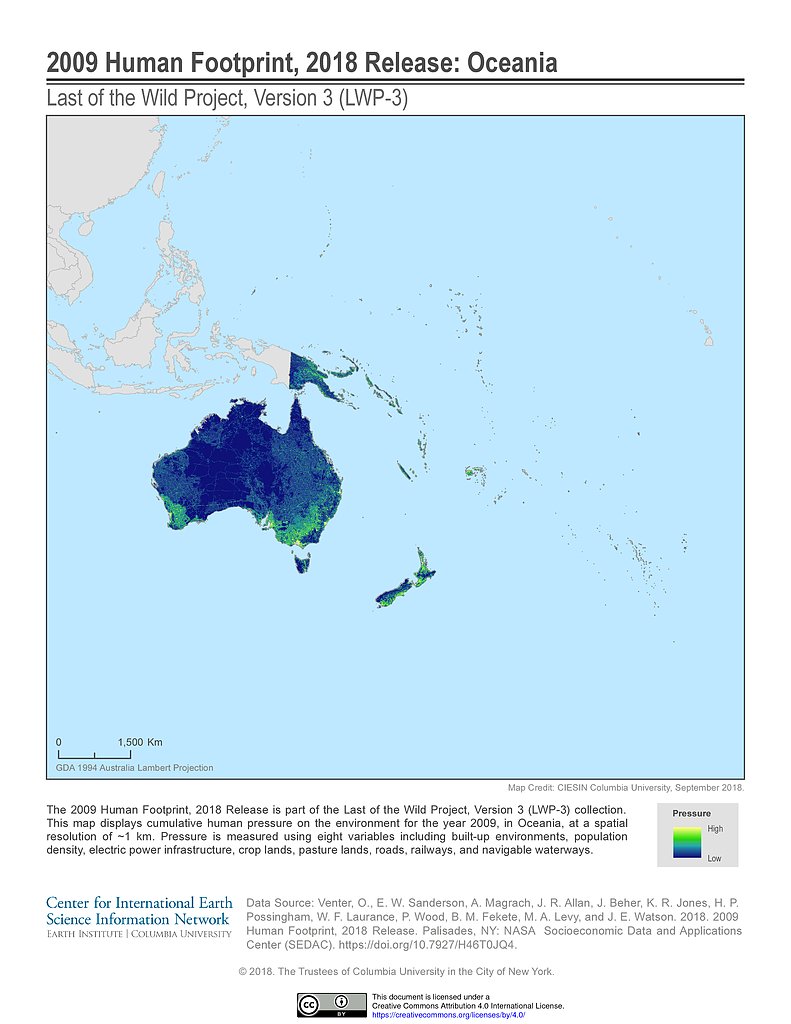
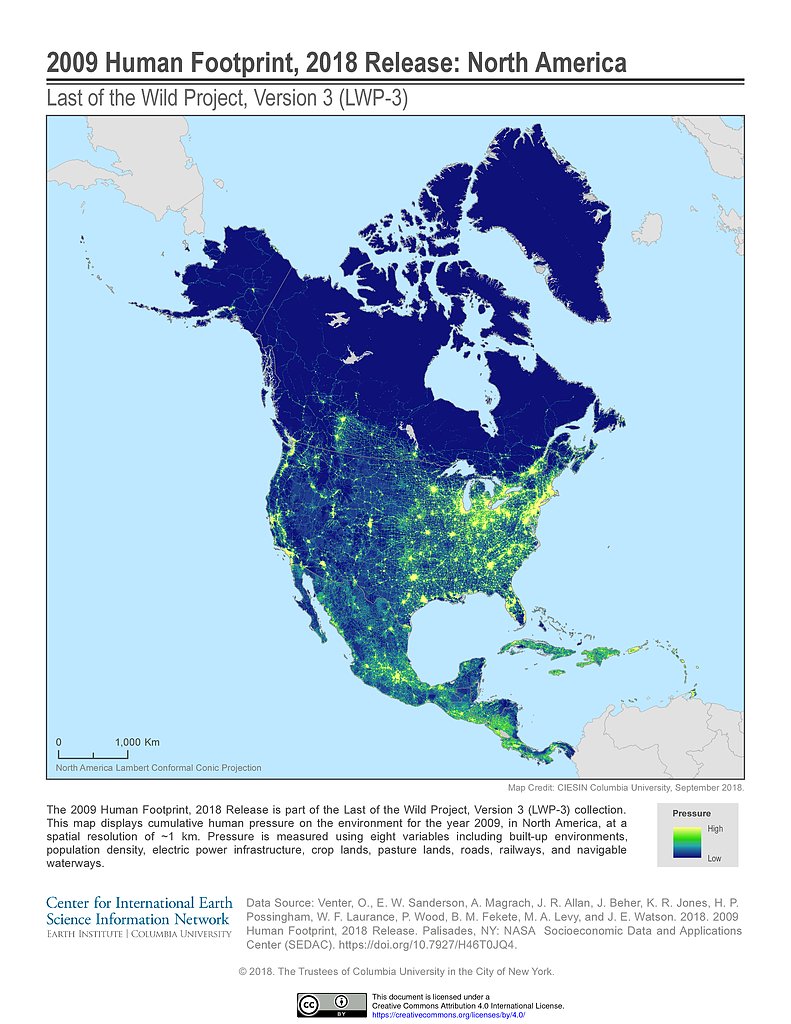
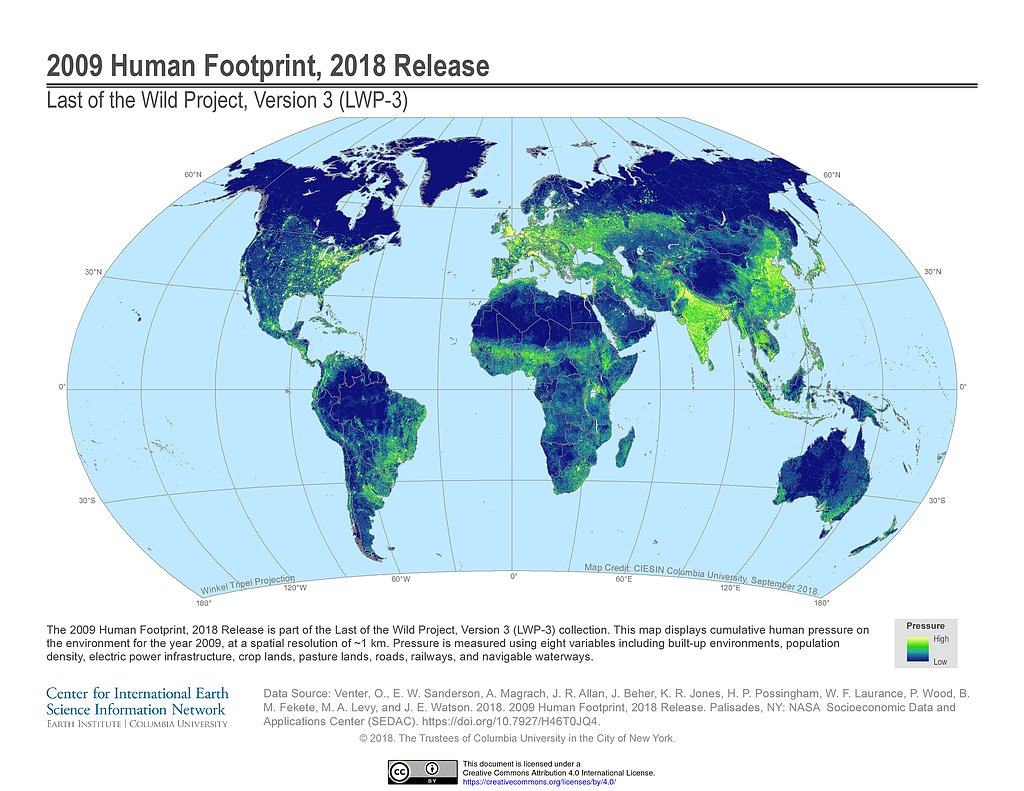
Featured Data Uses (2 of 4) View All
Human Impacts Drive Global Tree Cover PatternsNature Communications Human impacts have resulted in a global tendency for tree cover to be constrained to sloped terrain and losses to be concentrated on flat terrain. This effect, which the researchers quantify using NASA’s Moderate Resolution Imaging Spectroradiometer (MODIS) and Shuttle Radar Topography Mission (SRTM) satellite instruments, increases in strength with increasing human pressure, as measured by SEDAC’s Human Influence Index data set. It is most pronounced in countries with rapidly growing economies, limited human population stress, and highly effective governments, as defined in SEDAC’s Environmental Sustainability Index. By combining these measures of human influence with the remote sensing of trees, the researchers show how interactions between local topographic conditions and human impacts control tree cover distribution. |
Africa Human Footprint MapNational Geographic A map of SEDAC′s the Human Footprint illustrates the extent to which Africa′s land area is influenced by humans. |